
How to start
and a new name for this publication

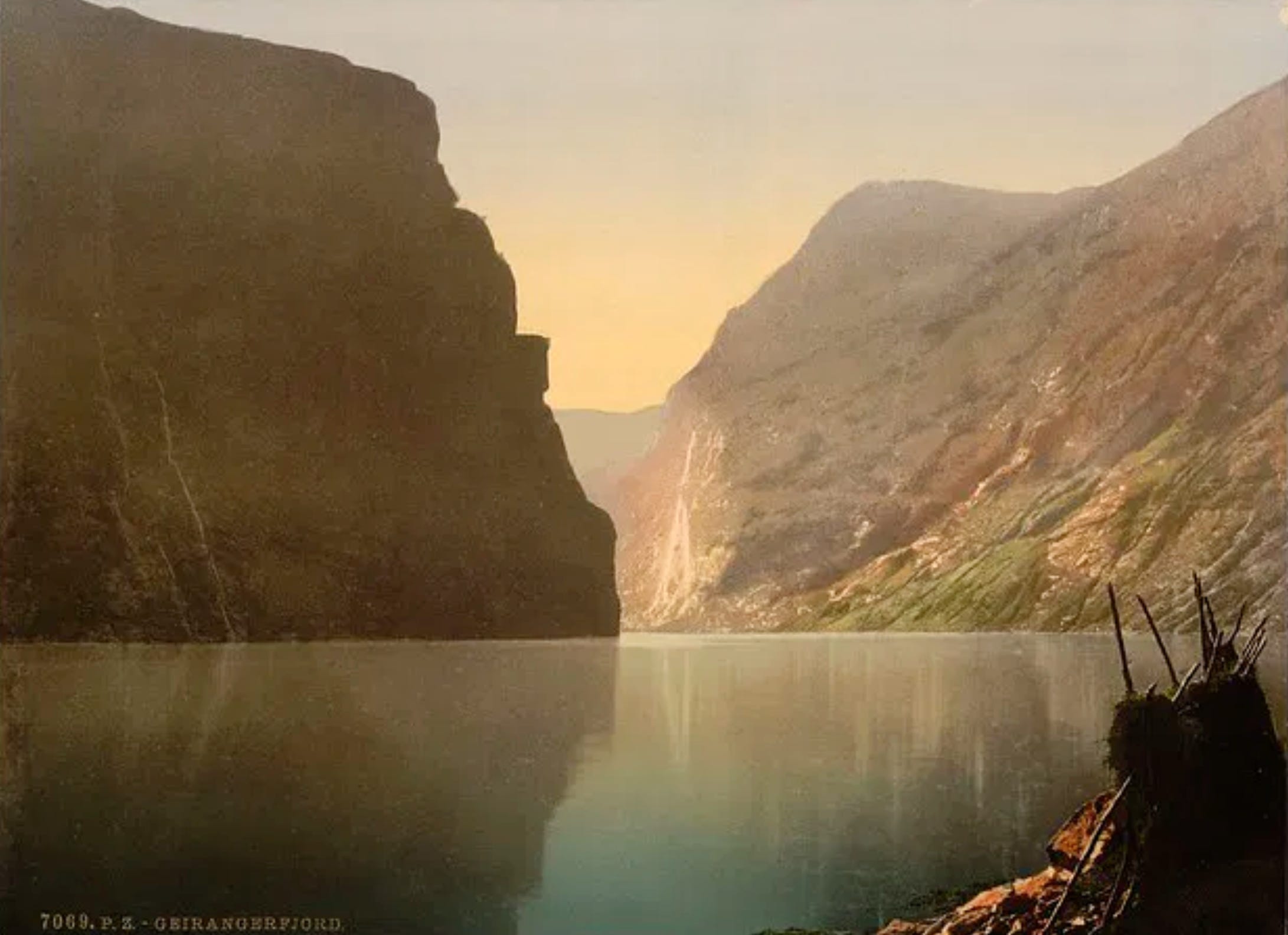
Somewhere in 10th century Iceland, or so the sagas tell us in old-timey font, there was once a farm nestled in a valley of buttercup meadows. A stream like a silver ribbon sliced up velvety pastures stuffed with sheep, rising into hills of moss and barren lava fields. In the farmhouse lived a clan—Stein, a wealthy farmer, Thorgard, his wife, and Ref, their swarthy and handsome young son, plus assorted cousins and helpers. Everybody bunked together in a communal sleeping platform built around the cozy hearth, the driftwood rafters of the house blackened by smoke. The gang wrangled livestock, fished and hunted, spun their own clothes from wool, grew cabbages and herbs, with the exception of Ref (which means fox in Icelandic), who “had no other occupation than to sprawl” in front of the fire. His parents were distressed by his couch-potato lifestyle. The villagers called him a fool.
Then the troubles began: big-daddy Stein died. Sensing weakness, the family’s next-door neighbor—the rich and notoriously murderous Thorbjörn (he had a rep all around Iceland)—loosed his sheep on their plush meadows. No amount of shooing away could keep the grazers out; they mercilessly hoovered up the grass. The widowed Thorgard hired a trusty sheep guard to keep watch over the pastures, which worked out great for a few months, except Thorbjörn went full-on sociopath and murdered him in cold blood.
Once again, Thorbjörn’s sheep ravaged the clan’s meadows, but now so thoroughly down-to-the-dirt that their own sheep starved—and the farm was threatened with total collapse. At this point, Thorgard finally lost it, and in an epic rant put young Ref on blast: I wish you’d never been born. Our land is eaten bare. We’ve got a murdery neighbor on the loose, and yet you lie there, you idle good-for-nothing lout, as if you could do nothing.
Suddenly Ref jumped up, threw his spear far ahead and ran after it.
And he kept on, just like that—huffing as he caught up to his spear, and hurling it far ahead again.
This exercise (maybe Ref’s first ever?) delivered the lad face-to-face with the socio no one else dared to confront, the evil Thorbjörn, whom he slayed with one courageous sword-stab, finally liberating the farm from its sheep-munching peril. And Ref’s momentum didn’t quit—after returning home to share the good news with mum, he became a master shipbuilder, sailed to faraway Greenland, made a killing in artisanal home goods, married a hottie named Helga, fathered a few strapping sons, honorably vanquished yet-more evildoers, and hobnobbed with the King of Denmark.
I feel that guy.
I get being stuck. I can only imagine the cozy warmth and enchanting flicker of the family hearth, singing Ref’s knuckle-hair as he toasted yet another round of s’mores.
I’m not so different. Except I don’t have a communal hearth. I have internet-connected devices.
I wish we could warm ourselves by the cackling fire of a communal hearth. Instead we’re sucked into the ghostly burn of screen time—where everyone seems to live—except we fall one by one into the narcotic haze of our phones, hijacked and hypnotized on levels we barely even perceive.
For that reason, I don’t keep Instagram on my phone, yet when I do drop in to keep up (for as minimal a scroll as I can manage) I can’t seem to exit without a chill—distracted, a little bit disoriented and demoralized. I set a limit on the time I can spend on phone email but broke it 31 times yesterday, reflexively thumbing down to refresh my inbox like a lab rat pawing for sugar, looping toward a promise of satisfaction that never arrives. And I find that even the slightest glimpse at news-related stuff invokes a paralysis spiral, with twinges of hopelessness. The tech cartels have perfected the casino arts of attention harvesting, deliberately siphoning off our sense of direction and purpose, the better to redirect us to their ends.
So how do you snap out of the funk? How do you start, even when it seems impossible? I think of Ref, and his peculiar method for breaking the spell of stuckness and distraction—just hurl a pointy intention as far ahead as you can in this moment: I’m gonna make a demented emoji painting. I will monotask an essay on Ramanujan’s dreams for 15 minutes. I’m going to perform at a friend’s open mic even if my abdomen feels like jelly. Then run like heck to catch up. And repeat.
It’s totally ok if you can’t tell where it’s going. In fact, it’s a feature. On any given toss, Ref could never have predicted the arc of his path—from a cozy-but-stifling hearth (which tbh probably smelled like farts), to a shipbuilding shed on the coast of Iceland, to the craggy fjords of Greenland and Norway and a dreamy estate in Denmark. His story isn’t titled The Saga of Ref the Sly for nothing. Mr foxy-pants knew he didn’t need to know the outcome, he just needed to start throwing.
However, unlike the sagas, irl spear-hurling gets a bit more messy.
Last year on a zoom, I described to a friend who runs a wonderfully creative biz how I’d checked the little box in Substack settings that says “email me when someone unsubscribes.” It was a naive, thoughtless little click; I promptly forgot about it. Then I published a post and got more unsubscribe emails than likes—and each one lodged in my heart like an automated stab. Never mind that it’s practically a law of physics that whenever you email a list larger than, say, your Dunbar number (~150), some fractional percent have forgotten (if they ever knew) that your newsletter existed, or have simply found a new, rejuvenating hyper-fixation on TikTok and will unsubscribe. I know this in my brain, I told her. And btw yes, I continued before she could ask, I HAVE READ The Four Agreements, and I’m very aware that #2 is Don’t Take Things Personally, yet I did within a limbic system hot nanosecond. I couldn’t help it. I immediately unchecked that box. And here I was days later still a bit shame-triggered by my personal stew, wincing and not at all grateful for this self-development opportunity.
She told me that she hadn’t looked at her Google Analytics in such a long time that Google sent her an email threatening to close her account unless she logged in. She did not log in. Which perked me up, because I’d already landed on the same Google Analytics policy—I hope it’s rotted off by now—and maybe I could port this skill of total ignorance to all my other stats.
She smiled and asked me, Why are you writing this Substack?
And I said, For the real.
I don’t write for algos, I told her. I write this Substack for the sunset walk I took with a friend—we met because of the first essay I published here—and how at dusk on a bench next to a sycamore we talked about her work and my most recent post, and I felt so seen and enveloped in a golden haze of sweetness that we had to double hug goodbye. I write for all the crazy-good writers and readers I’ve met here, for your comments, shares and replies. I write for you. Because if only for a moment, writing brings us together. Because the world is a tiny bit changed with our writing in it. Because writing is the fractal pinballing of consciousness across space and time, and on a good day it is a kind of bliss to fling words into that totally weird, life-of-its-own evolutionary melting pot we call ‘writing in public,’ where thought-forms compete to spawn another niche, another portico in the infinitely ramshackle mansion of our culture. Because I love writing, in that old sense of Ibn Arabi’s, where love is the capacity with which we make the invisible visible, and the desire to reveal the invisible that is always in our midst.
Long after that zoom, those three words—for the real—stuck with me. I couldn’t quite pin down what they mean, and I still can’t.
The philosophers are not much help.
For Heraclitus, ever the tart observer, the real is everywhere, but no one who hears it understands it. Plato told us we lurk in the shadows of the real; Spinoza and the early mono-vision Christians disagreed, for them, all things are modes of this one divine Real. For Berkeley, who sounded like a 1700’s influencer, to be real is to be perceived. Kant flipped the script again, telling us the real is unknowable, beyond any possible experience like a pleasant political discussion at Thanksgiving. For Heidegger, the real isn’t a pumpkin spice Frappuccino, it’s the event of presence, the gap where being appears. And for cheery Lacan, the Real is ultimately another name for the void. After Neo wakes up from his simulation fever dream in The Matrix, Morpheus infamously gestures to the smoking ruins of Chicago and says: Welcome to the desert of the real.
I think of how all these dudes more or less disagreed with each other, and of how each age redefined the Real again in its own image. It’s been a flaming hot topic for at minimum 2600 years, yet we bring it up casually in our everyday convos, like it’s the most obvious thing in the world—just be real.
I think back to my zoom trigger-state last year, and how a simple question knocked loose three deceptively easy-to-read words. They kept rattling around my thoughts until earlier this week, when I finally typed them into a text box and renamed this Substack For the Real.
The old name, The Pamplet, had gone stale. I felt a creeping stuckness and the lull of distraction candy, like wouldn’t it be nice to not notice that it’s time for a change? I don’t know where the new name leads. Just like Ref, I’m hurling it forward as far as I can, and running to catch up. After all, that’s what I love most about writing here for you.
Love the new name!
I’m still pretty stuck, but suffice it to say I have tears in my eyes. Not only hope, but more like a tangible clue. More like actual blood from an actual spear. Thank you so much.